Auditory-
Auditory hallucinations (also known as paracusia) are the perception of sound without outside stimulus. Auditory hallucinations can be divided into two categories: elementary and complex. Elementary hallucinations are the perception of sounds such as hissing, whistling, an extended tone, and more. In many cases, tinnitus is an elementary auditory hallucination. However, some people who experience certain types of tinnitus, especially pulsatile tinnitus, are actually hearing the blood rushing through vessels near the ear. Because the auditory stimulus is present in this situation, it does not qualify as a hallucination.
Complex hallucinations are those of voices, music, or other sounds which may or may not be clear, may be familiar or completely unfamiliar, and friendly or aggressive, among other possibilities. Hallucinations of one or more talking voices are particularly associated with psychotic disorders such as schizophrenia, and hold special significance in diagnosing these conditions. However, many people not suffering from diagnosable mental illness may sometimes hear voices as well. One important example to consider when forming a differential diagnosis for a patient with paracusia is lateral temporal lobe epilepsy. Despite the tendency to associate hearing voices, or otherwise hallucinating, and psychosis with schizophrenia or other psychiatric illnesses, it is crucial to take into consideration that even if a person does exhibit psychotic features, they do not necessarily suffer from a psychiatric disorder on its own. Disorders such asWilson's disease, various endocrinological disorders, numerous metabolic disturbances, multiple sclerosis, systemic lupus erythematosis, porphyria, sarcoidosis, and many others can present with psychosis.
Musical hallucinations are also relatively common in terms of complex auditory hallucinations and may be the result of a wide range of causes ranging from hearing-loss (such as in musical ear syndrome, the auditory version of Charles Bonnet syndrome), lateral temporal lobe epilepsy, arteriovenous malformation, stroke, lesion, abscess, or tumor.
The Hearing Voices Movement is a support and advocacy group for people who hallucinate voices, but do not otherwise show signs of mental illness or impairment.
High caffeine consumption has been linked to an increase in the likelihood of experiencing auditory hallucinations. A study conducted by the La Trobe University School of Psychological Sciences revealed that as few as five cups of coffee a day could trigger the phenomenon.

Command hallucinations-
Command hallucinations are hallucinations in the form of commands; they can be auditory or inside of the persons mind and / or consciousness. The contents of the hallucinations can range from the innocuous to commands to cause harm to the self or others.Command hallucinations are often associated with schizophrenia. People experiencing command hallucinations may or may not comply with the hallucinated commands, depending on circumstances. Compliance is more common for non-violent commands.
Command hallucinations are sometimes used in defense of a crime, often homicides. It is essentially a voice one hears and it tells them what to do. "Sometimes they are quite benign directives such as "Stand up." or "Shut the door." Whether it is a command for something simple or something that is a threat, it is still considered a "command hallucination." Some helpful questions that can assist one in figuring out if they may be suffering from this includes: "What are the voices telling you to do?","When did your voices first start telling you to do things?, "Do you recognize the person who is telling you to harm yourself (others)?", "Do you think you can resist doing what the voices are telling you to do?".
Olfactory-
Phantosmia is the phenomenon of smelling odors that aren't really present. The most common odors are unpleasant smells such as rotting flesh, vomit, urine, feces, smoke, or others. Phantosmia often results from damage to the nervous tissue in the olfactory system. The damage can be caused by viral infection, brain tumor, trauma, surgery, and possibly exposure to toxins or drugs. Phantosmia can also be induced by epilepsy affecting the olfactory cortex and is also thought to possibly have psychiatric origins.Phantosmia is different from parosmia, in which a smell is actually present, but perceived differently from its actual smell.
Olfactory hallucinations can also appear in some cases of associative imagination, for example, while watching a romance movie, where the man gifts roses to the woman, the viewer senses the roses' odor (which in fact does not exist).
General somatic sensations of a hallucinatory nature are experienced when an individual feels that his body is being mutilated i.e. twisted, torn, or disembowelled. Other reported cases are invasion by animals in the person's internal organs such as snakes in the stomach or frogs in the rectum. The general feeling that one's flesh is decomposing is also classified under this type of hallucination.
Peduncular means pertaining to the peduncle, which is a neural tract running to and from the pons on the brain stem. These hallucinations usually occur in the evenings, but not during drowsiness, as in the case of hypnagogic hallucination. The subject is usually fully conscious and then can interact with the hallucinatory characters for extended periods of time. As in the case ofhypnagogic hallucinations, insight into the nature of the images remains intact. The false images can occur in any part of the visual field, and are rarely polymodal.\
Focal epilepsy-
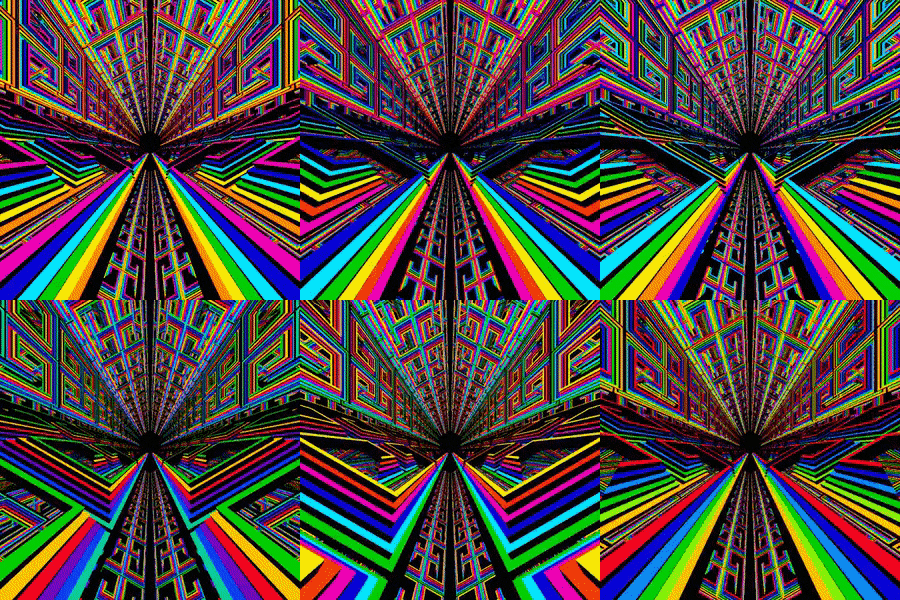
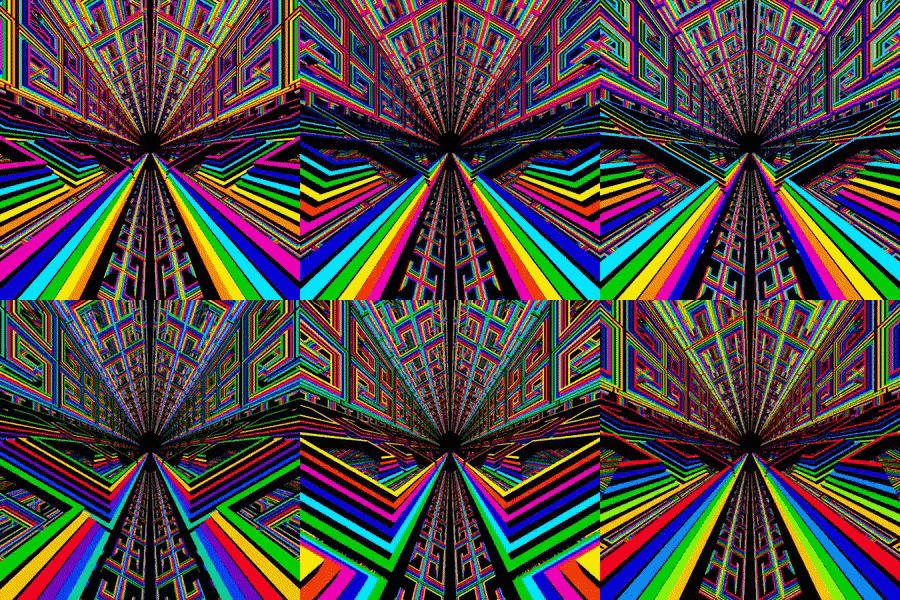
Visual hallucinations due to focal seizures differ depending on the region of the brain where the seizure occurs. For example, visual hallucinations during occipital lobe seizures are typically visions of brightly colored, geometric shapes that may move across the visual field, multiply, or form concentric rings and generally persist from a few seconds to a few minutes. They are usually unilateral and localized to one part of the visual field on the ipsilateral side of the seizure focus, typically the temporal field. However, unilateral visions moving horizontally across the visual field begin on the contralateral side and move towards the ipsilateral side.
Temporal lobe seizures, on the other hand, can produce complex visual hallucinations of people, scenes, animals, and more as well as distortions of visual perception. Complex hallucinations may appear real or unreal, may or may not be distorted with respect to size, and may seem disturbing or affable, among other variables. One rare but notable type of hallucination is heautoscopy, a hallucination of a mirror image of one's self. These "other selves" may be perfectly still or performing complex tasks, may be an image of a younger self or the present self, and tend to be only briefly present. Complex hallucinations are a relatively uncommon finding in temporal lobe epilepsy patients. Rarely, they may occur during occipital focal seizures or in parietal lobe seizures.
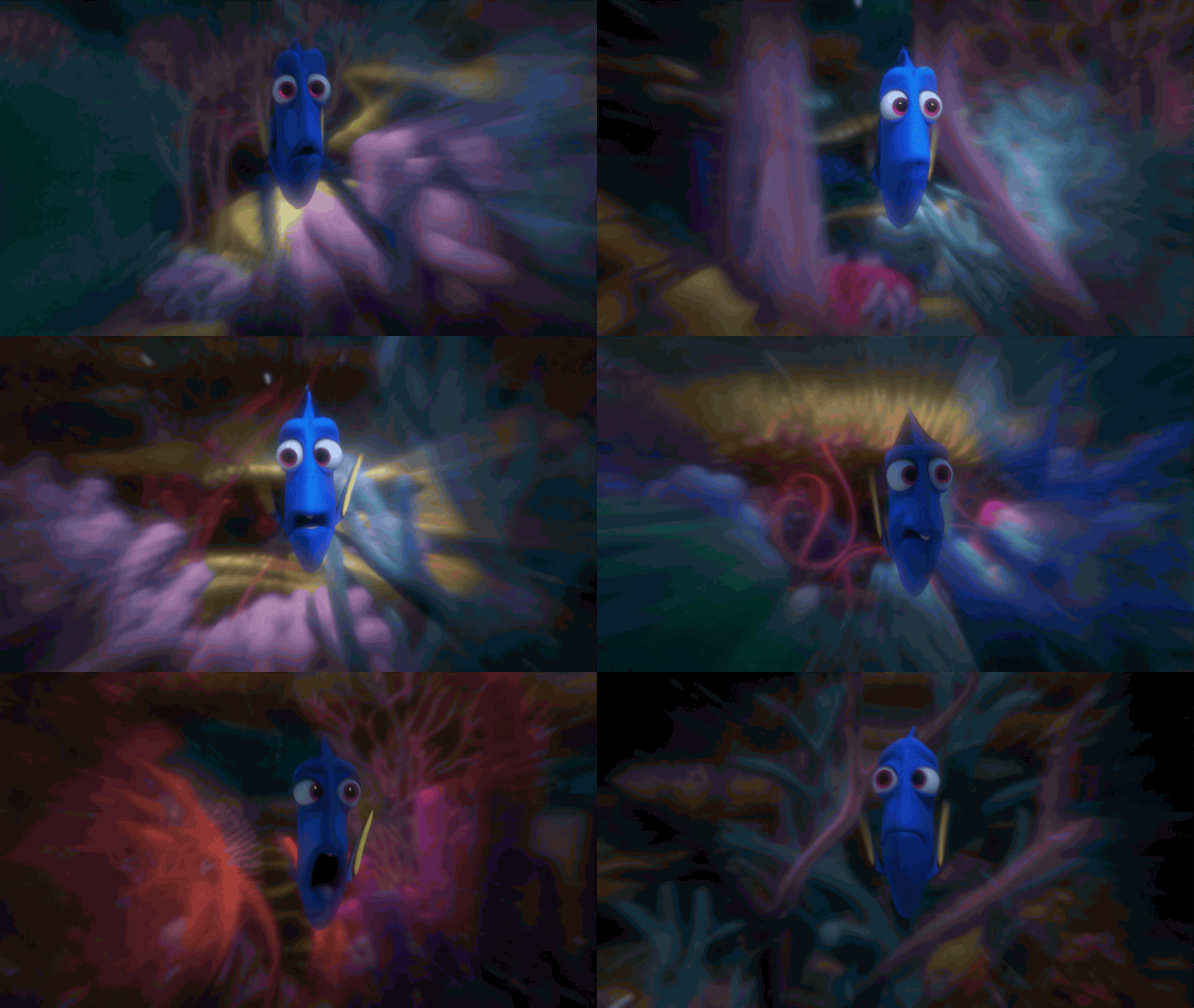
Distortions in visual perception during a temporal lobe seizure may include size distortion (micropsia or macropsia), distorted perception of movement (where moving objects may appear to be moving very slowly or to be perfectly still), a sense that surfaces such as ceilings and even entire horizons are moving farther away in a fashion similar to the dolly zoom effect, and other illusions. Even when consciousness is impaired, insight into the hallucination or illusion is typically preserved.
Visual-
Sometimes internal imagery can overwhelm the sensory input from external stimuli when sharing neural pathways, or if indistinct stimuli is perceived and manipulated to match one's expectations or beliefs, especially about the environment. This can result in a hallucination, and this effect is sometimes exploited to form an optical illusion.
There are 3 pathophysiologic mechanisms thought to account for complex visual hallucinations theses mechanisms consist of the following:
The first mechanism involves irritation of cortical centers responsible for visual processing (e.g., seizure activity). The irritation of the primary visual cortex causes simple elementary visual hallucinations.
The second mechanism involves lesions that cause deafferentation of the visual system may lead to cortical release phenomenon, which includes visual hallucination.
The third mechanism is the reticular activating system, which has been linked to the genesis of visual hallucinations.
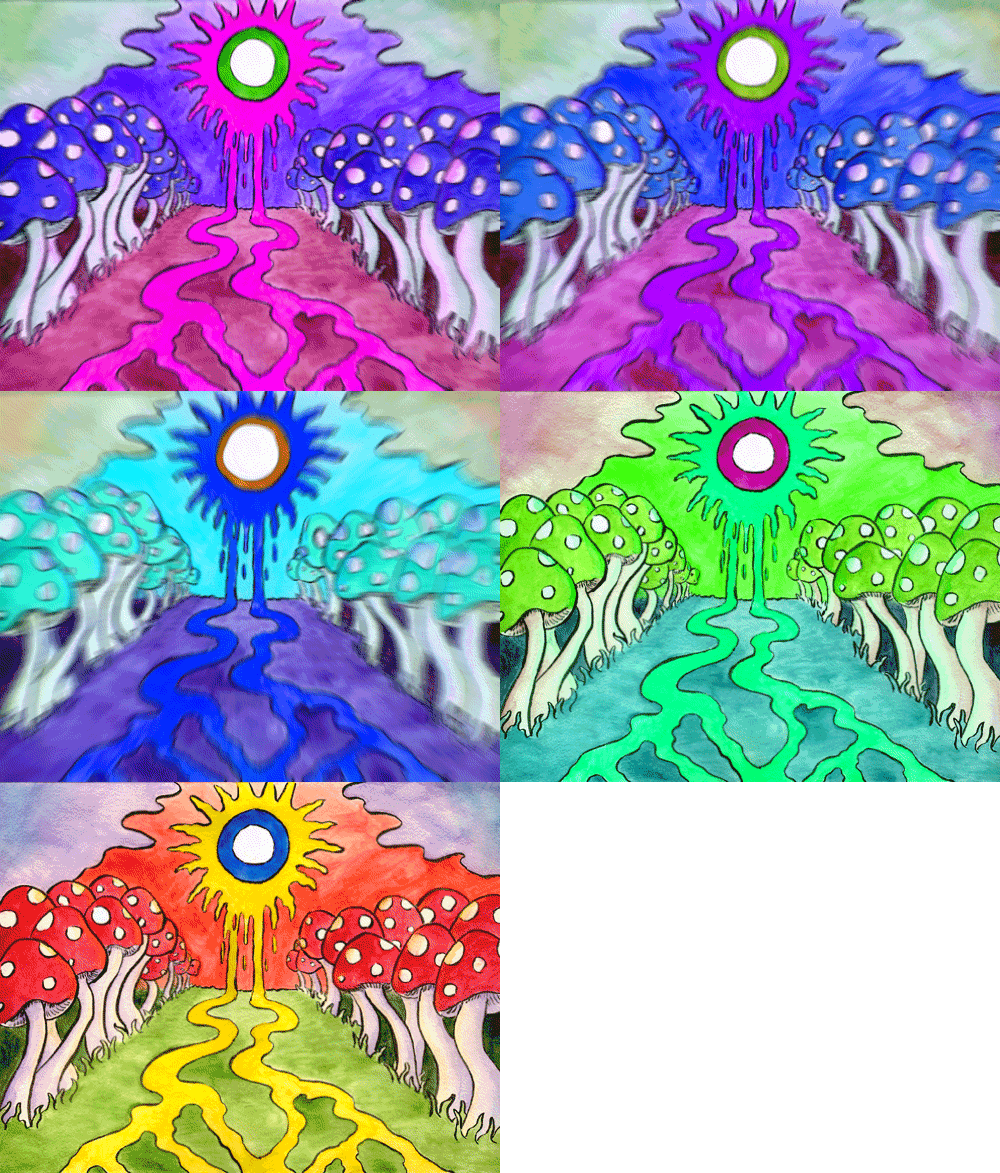
Some specific classifications include: elementary hallucinations, which may entail flicks, specks, and bars of light (called phosphenes).Closed eye hallucinations in darkness, which are common to psychedelic drugs (i.e., LSD, mescaline). Scenic or "panoramic" hallucinations, which are not superimposed but vividly replace the entire visual field with hallucinatory content similarly to dreams;such scenic hallucinations may occur in epilepsy (in which they are usually stereotyped and experimental in character), hallucinogen use, and more rarely in catatonic schizophrenia (cf. oneirophrenia), mania, and brainstem lesions, amongst others.
Another thing that may cause visual hallucinations is prolonged visual deprivation. Which a study was done where 13 healthy people were blindfolded for a period of 5 days and 10 out of the 13 subjects reported visual hallucinations. This finding lends strong support to the idea that the simple loss of normal visual input is sufficient to cause visual hallucinations.
Psychodynamic Facts-
Various theories have been put forward to explain the occurrence of hallucinations. When psychodynamic (Freudian) theories were popular in psychology, hallucinations were seen as a projection of unconscious wishes, thoughts and wants. As biological theories have become orthodox, hallucinations are more often thought of (by psychologists at least) as being caused by functional deficits in thebrain. With reference to mental illness, the function (or dysfunction) of the neurotransmitters glutamate and dopamine are thought to be particularly important. The Freudian interpretation may have an aspect of truth, as the biological hypothesis explains the physical interactions in the brain, while the Freudian deals with the origin of the theme of the hallucination. Psychological research has argued that hallucinations may result from biases in what are known as metacognitive abilities.
Hallucinations caused by schizophrenia. Schizophrenia is when one is unable to tell the difference between real and unreal experiences, accompanied by the inability to think logically, have contextually appropriate emotions, and to function in social situations. Scientifically reviewed. 21 October 2012. Web. It has been found that when one experiences a hallucination induced by Schizophrenia, there are many abnormalities that are going on in the brain; Particularly in the region that processes voices in sounds (for those who experience auditory hallucinations) and visual processing. (visual hallucinations). According to studies and experiments conducted by researchers, it was seen that a possible cause for these hallucinations were abnormalities in gray matter and general functioning that combines interpreting sounds, voices and visuals, as well as regulating emotions.
Neuroanatomical Correlates-
Normal everyday procedures like getting an MRI (Magnetic Resonance Imaging) have been used to find out more about auditory and verbal hallucinations. "Functional magnetic resonance imaging (fMRI) and repetitive transcranial magnetic stimulation (rTMS) were used to explore the pathophysiology of auditory/verbal hallucinations (AVHs)" Throughout the exploring through MRI's of patients,there were "lower levels of hallucination-related activation in Broca’s area strongly predicted greater rate of response to left temporoparietal rTMS." What these findings could suggest is that "dominant hemisphere temporoparietal areas are involved in expressing AVHs, with higher levels of coactivation and/or coupling involving inferior frontal regions reinforcing underlying pathophysiology."
There are few treatments for many types of hallucinations. However, for those hallucinations caused by mental disease, a psychologist or psychiatrist should be alerted, and treatment will be based on the observations of those doctors. Antipsychotic and atypical antipsychotic medication may also be utilized to treat the illness if the symptoms are severe and cause significant distress. For other causes of hallucinations there is no factual evidence to support any one treatment is scientifically tested and proven. However, abstaining from hallucinogenic drugs, managing stress levels, living healthily, and getting plenty of sleep can help reduce the prevalence of hallucinations. In all cases of hallucinations, medical attention should be sought out and informed of one's specific symptoms.
One study from as early as 1895 reported that approximately 10% of the population experienced hallucinations. A 1996-1999 survey of over 13,000 people reported a much higher figure, with almost 39% of people reporting hallucinatory experiences, 27% of which were daytime hallucinations, mostly outside the context of illness or drug use. From this survey, olfactory (smell) and gustatory (taste) hallucinations seem the most common in the general population.
